-
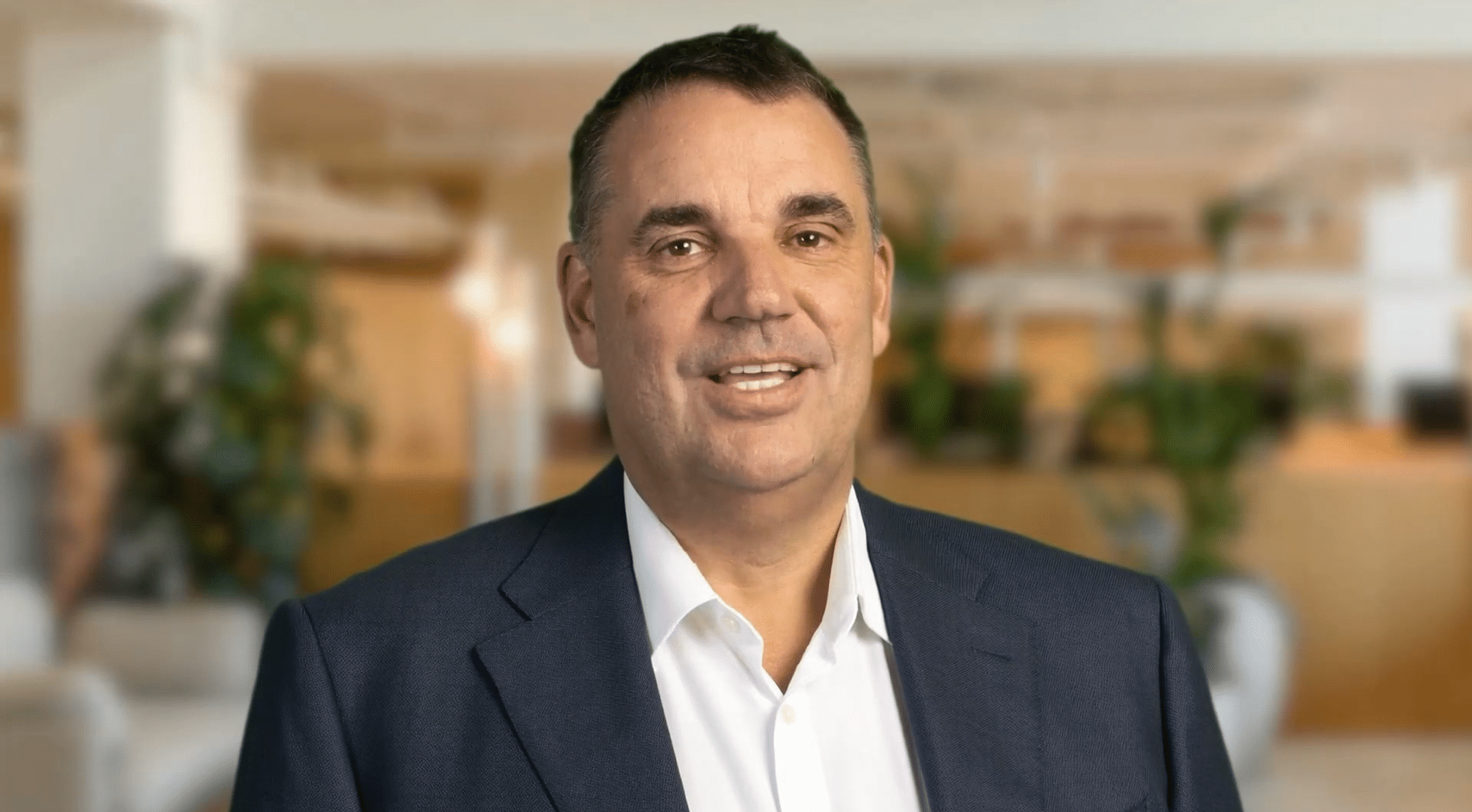
‘It’s a great way for your CFO to bring AI into the storyline’: how NSI’s AI avatars represent the future of earnings calls
You’d be forgiven for thinking earnings calls tended to be a bit predictable. Management runs through the numbers, analysts lob in their questions and the format barely shifts whether you’re dialing in from London, New York or Sydney.
-

If AI cannot understand your equity story, then neither can the market
For decades, investor relations focused on one overarching objective: shaping market perception. Companies invested in perception studies to understand how investors, analysts and the financial media viewed their strategy, competitive positioning, and long-term value creation.
-

Forum – AI & Technology Europe
About the event In today’s rapidly evolving financial landscape, AI is transforming how IROs engage with investors, analyze market sentiment and deliver insights. Yet, many IR teams face challenges in understanding and employing these tools effectively. The IR Impact Forum – AI & Technology Europe will take place on Thursday,…
-

‘AI tools helped us shave a week off the earnings process,’ says Lear Corporation IR leader
The earnings call process is one of the biggest placeholders on the IR calendar. Research by IR Impact from last year shows that IR professionals are spending 25 percent of their time on earnings preparation – notably more than the next biggest time sink, roadshows and investor meetings (19 percent), even though corporate access is the bread and butter of the role. Technology is rapidly reshaping many elements of the IR function. And the biggest changes are in those areas where tasks are time consuming and often repetitive, where regulation leaves no wiggle room – and where many other people,…
-

Reputation in AI responses: What language models reveal and what they don’t
In October 2025, a merchant sent a screenshot to his account manager. He had searched Google for Is Unzer trustworthy?, a seemingly harmless question that is likely asked about companies thousands of times every day. The answer he received was a Google AI Overview stating: ‘Whether Unzer is trustworthy cannot be answered definitively, as there are conflicting experiences.’
-

How IR can drive value by merging AI and ESG reporting
Investor relations is uniquely positioned to become the bridge between two of the most important value drivers for investors of the past and coming decades: AI and ESG performance.
-

How IR teams’ use of AI is evolving, from the AI & Technology Forum in London
IR Impact recently hosted its AI and Technology Forum in London, bringing together senior investor relations professionals, technology leaders and market experts to explore how artificial intelligence is reshaping IR today and what lies ahead.
-

Surviving the ‘agent AI vs agent AI’ paradigm in shareholder targeting
If you remember the 1999 sci-fi classic The Matrix, humanity eventually realizes that to survive in a world governed by sentient machines, they must deploy their own autonomous programs to fight back. If you have been in investor relations long enough, you might feel as though we are waking up to a similarly stark reality in 2026. We have officially entered the ‘agent AI vs agent AI’ paradigm.
-
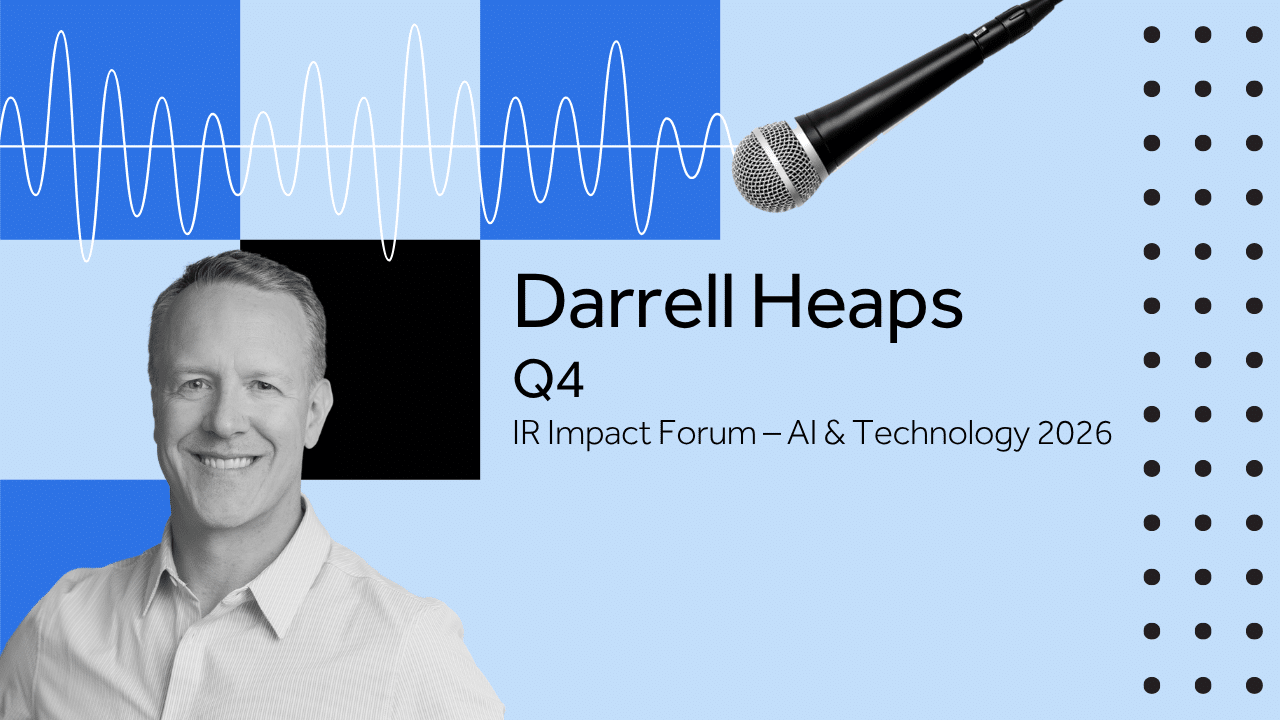
‘We’re in a world where AI adapts to your workflow’: Q4’s Darrell Heaps at the IR Impact Forum – AI & Technology Europe
With IR teams becoming more adventurous in their experimentation with AI, many are finding new and nuanced ways to employ the technology to improve their workflows.
-
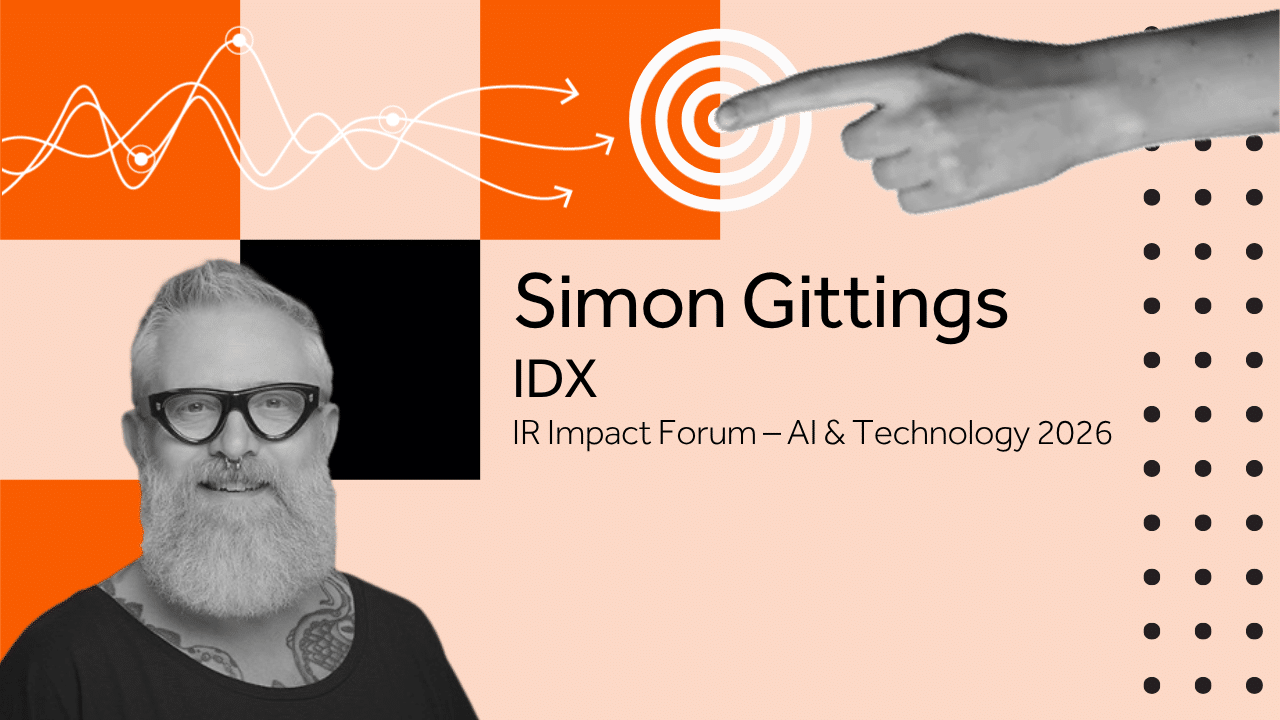
‘AI increasingly mediates the conversation with investors’: IDX’s Simon Gittings at the IR Impact Forum – AI & Technology Europe
With the role of the corporate website evolving in a post-AI world, IR teams are grappling with the challenge of making sure they are the authoritative source of information about their company in the market.
-

‘The relationship side of IR is still key’: MUFG Corporate Markets’ Gustav Pegers on the role of AI
It is often said that, for all of the innovation that AI can offer IR professionals, the key to successful communications with the capital markets will always be reliant on relationships.
-
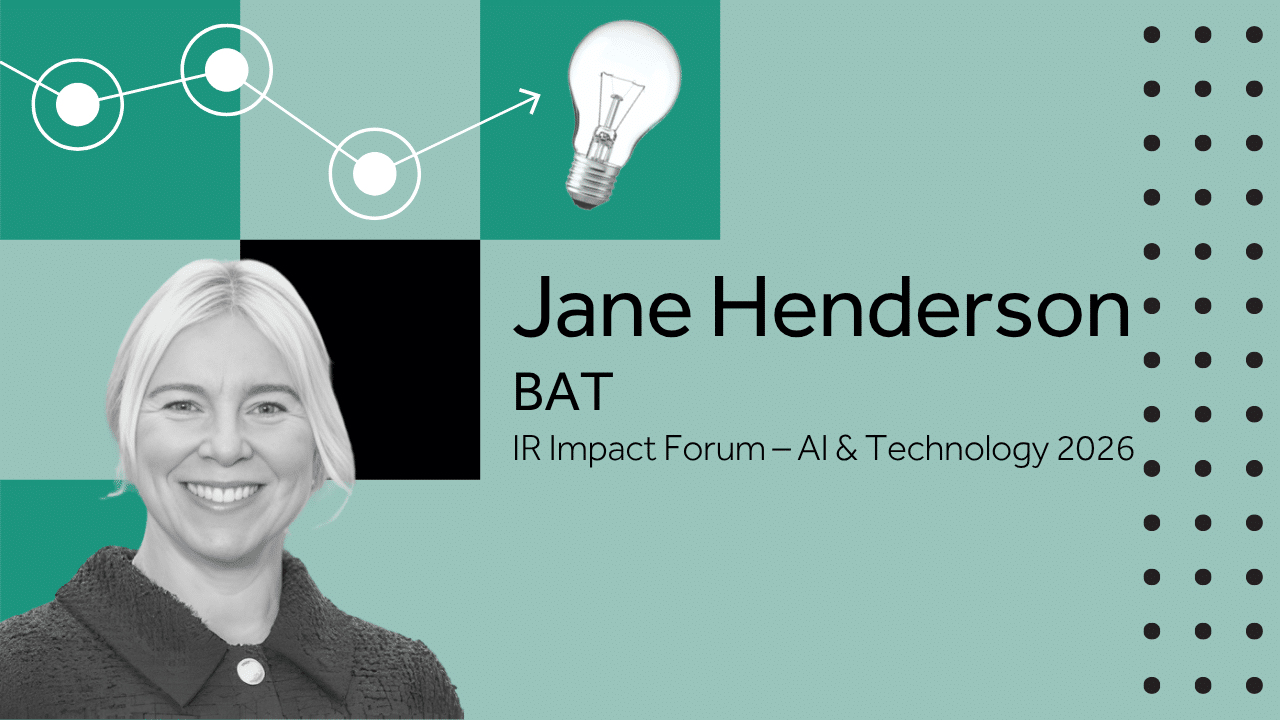
‘It’s moving so fast’: BAT’s Jane Henderson at the IR Impact Forum – AI & Technology Europe
Many companies are approaching their use of AI with a degree of trepidation, with many departments – including IR teams – concerned about data security and other risks at play.
-

AI-driven investor relations: From static targeting to agentic workflows
The philosophy of investor relations is shifting under our feet. For years, IR teams have relied on static attributes – assets under management, geography, investment style – to decide whom to target. That era is ending. A new, AI-driven approach is emerging that focuses not on who investors are, but on what they are likely to do next.
-
‘It’s fascinating to hear how people are using it’: Getech’s Irina Logutenkova at the IR Impact Forum – AI & Technology Europe
Understanding how the buy and sell side are using AI to improve their investment decisions is something that is key for IROs to grapple with, else they face missing their main audience’s key expectations.
-

‘There is a ton of opportunity to remove really repetitive, manual tasks for IR teams’: S&P Global’s Chris Blake at the IR Impact Forum – AI & Technology Europe
One of the key benefits for IR teams hoping to use AI alongside their daily workflows is the removal of labor-intensive, repititive tasks, many proponents of the technology say.
-

‘I think of ChatGPT as the very keen intern’ – Five key takeaways from the IR Impact Forum – AI and Technology in London
AI is rapidly changing how investor relations teams gather data, communicate with investors and measure engagement. However, as AI usage continues to climb, new challenges emerge beyond mere implementation.
-

Negative growth, reaching out and stakeholders: Curbing jargon in investor relations
Most investor relations officers I know are expert communicators. They tend not to rely on jargon or buzzwords to tell their stories – in fact, most of their stakeholders can see through any obfuscation, or will pick up on any woolly language as a negative indicator.
-

‘Start with the objective, not the technology’: Infineon’s Daniel Györy on ensuring AI drives value for his IR program
For Daniel Györy, senior director, investor relations at German semiconductor firm Infineon Technologies, AI is only worth using if it can ‘meaningfully’ improve an IRO’s day-to-day work.
-

How can IROs increase annual report visibility in generative AI?
Generative AI (genAI) has become a central gatekeeper between companies and stakeholders. A growing number of investors use large language models (LLMs) such as ChatGPT to research companies, challenge investment ideas and analyze financial and market information. But how visible are annual reports as sources in these systems? And how can IROs improve the visibility of verified financial disclosures? The shift in information usage creates new risks for IROs. LLMs can hallucinate or generate plausible but incorrect answers, especially when relying on third-party sources such as Reddit or Wikipedia, which are quite prominent in genAI. User-generated content often mixes facts…
-

‘IR must retool to nudge machines instead of humans’: Vodafone’s Matthew Johnson on how the profession will need to adapt to a new era
Matthew Johnson, Vodafone group communications director, is a former skeptic when it comes to AI. But, a quick demo from an AI-minded 25-year-old turned him into a convert and soon, IROs can hear first hand about Johnson’s approach to this rapidly evolving tech. As he prepares to talk about the investor and analyst approach to AI at the upcoming IR Impact Forum – AI and Technology Europe, which takes place on Thursday, March 12 in London, we caught up with Johnson to hear more about why the topic – and the tech – resonates with him. You can also hear…
-

Why capital allocation is the new equity story in the AI era
A familiar pattern is dominating the current earnings season: companies deliver clean beats on revenue and earnings – then see their shares wobble or sell off as management outlines higher-than-expected capex and a longer-dated investment phase. Alphabet and Amazon are prominent examples, but the takeaway for CFOs and IROs is broader: capital allocation has become the equity story. In an AI-driven market, the debate is no longer simply about growth. It’s about how that growth is funded, how long elevated investment will persist and what returns the capex is expected to generate. Investors aren’t punishing ambition; they’re repricing capital intensity,…
-

‘The next major challenge will be integrating AI in a scalable and value‑adding way’: Finnair’s Emilia Rannanniemi on approaching AI for IR
Emilia Rannanniemi, senior investor relations manager at Finnair, will be speaking about how she uses AI-driven market analysis to help benchmark her team’s IR performance and to free them up to concentrate on more strategic activities.
-

Why IR websites are moving from ‘platform-first’ to ‘flexibility-first’ in 2026
Most corporate investor websites were built for a simpler digital era. What used to be a dedicated IR microsite – hosted separately, updated through a vendor portal and managed via templated pages – no longer meets the demands of today’s digital environment.
-

Forum – AI & Technology
About the event A year ago, the conversation around AI within investor relations centred on adoption and implementation: which tools to use, how to implement them and how to manage the associated risks. Today, the landscape has evolved significantly. AI is no longer an emerging concept for many IR teams,…
-

IR in the age of AI: How answer engine optimization will transform content visibility
Content visibility and engagement are always key priorities for IR professionals. As AI and large language models (LLMs) become a primary source of information for buy-side and sell-side analysts, content visibility and narrative control are constantly shifting, creating new challenges in how audiences discover and engage with IR corporate content.
-
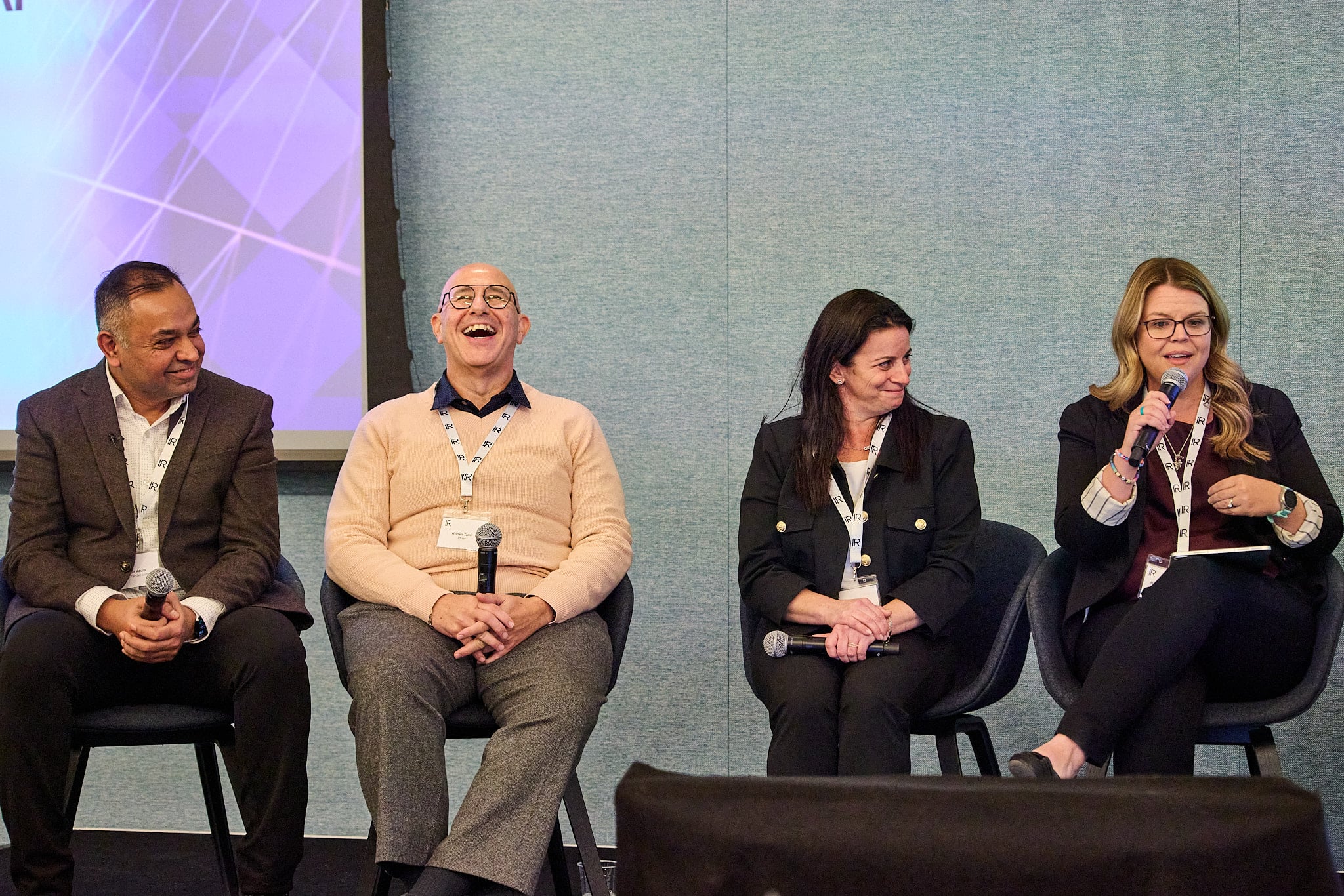
Responsible AI adoption in IR: from intimidation to impact
AI is everywhere in investor relations today. Yet for many IR teams, the journey from curiosity to confidence is anything but straightforward. The ’empty prompt window’ syndrome and uncertainty around where to start and how to trust the technology remain real.
-

‘Investors will leave money on the table if you don’t use AI’: four lessons we learned at the AI & Technology Forum – 2025
Unsurprisingly for those who read IR Impact regularly, AI is still considered one of the most transformative forces, not just for the IR profession, but for the capital markets in general. That may explain why more than 150 IR professionals gathered in New York in November to gain exclusive access to real-world case studies and insights from leading IROs, tech innovators and companies already using AI in their IR programs.
-

AI bubble or a soft landing? Looking at the data behind technology company valuations
The sheer numbers are overwhelming. Analysts estimate that 15 to 25 percent of the S&P 500’s value can be attributed to expectations of AI delivering substantial financial benefits for companies, which translates into 800 to 1,300 index points.
-

How advanced data and analytical tools are elevating IROs to be strategic leaders
The IR role is entering a new era, one defined by data, speed and strategic influence. In a world where financial markets are driven by real-time insights and rapidly shifting narratives, IR professionals are no longer just corporate messengers. They are increasingly expected to be analytical thinkers, competitive strategists and trusted advisors to the C-suite and board.


Notified

Playbook: Artificial intelligence and investor relations
Artificial intelligence – and generative AI in particular – has become a huge element of the business conversation but where does it fit into the world of investor relations? Notified and IR Magazine held a series of active workshops in Toronto, New York and London to hear from the world’s leading IROs about how they…
Sponsored PLAYBOOK
From our sponsor

Notified’s world-class, award-winning solutions and unparalleled customer service are relied upon by more than 9,000 global customers, from growing businesses and public companies to some of the world’s most recognizable brands.
Notified helps companies amplify their stories to investors, employees, and the media via GlobeNewswire press release distribution and regulatory filing, IR websites, earnings calls and webcasts, investor days, and a whistleblower hotline.
Learn more at www.notified.com.
