IR teams need to move with the times if they are to maintain an engaged audience, especially online. New channels and format choices are constantly springing up, offering innovative ways to educate and inform key stakeholders.
Looking for ideas for your own digital reporting? You’ve come to the right place. IR Magazine checks in with four companies thinking outside the box with their online communications.
We hear about a sustainability podcast focused on the construction industry, reaching retail investors through their TV, the benefits of running your earnings call on Zoom and, finally, how to break down the annual report for social media.
In each case, we explore the rationale behind the move and ask for advice about trying this out at another company. We hope you feel inspired to shake up your own approach to digital reporting.
Launch a sustainability podcast
The boom in the podcasting industry – with the number of worldwide listeners rising to more than 400 mn last year, according to Statista – has led companies to consider whether they should publish their own audio-only content series.
One issuer to take the plunge is Aecon. In September 2022, the Canadian company launched a monthly podcast called The Road to Net-Zero, which explores how the construction industry is integrating sustainability and its role in the transition to a low-carbon economy.
The show, co-hosted by Prabh Banga, Aecon’s director of sustainability, and Adam Borgatti, senior vice president of corporate development and IR, has covered topics from reducing concrete emissions to ESG reporting, and features a mix of internal and external interview subjects.
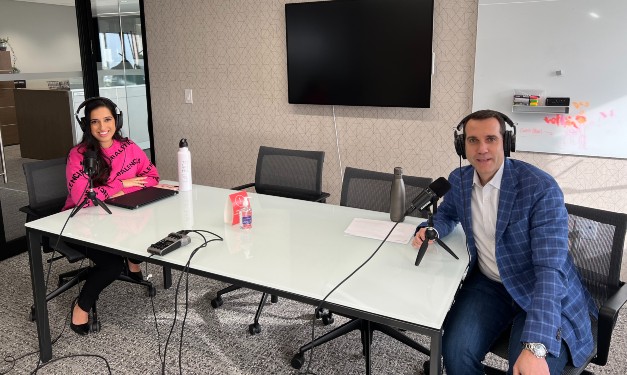
‘When working on our own sustainability strategy, we found there weren’t many other resources talking about sustainable construction,’ Banga tells IR Magazine.
‘With the rising interest in global issues, like climate change, decarbonization, diversity and inclusion, more people are turning to podcasts as a quick and easy source of information. So we felt the podcast would be a great format to reach a vast audience. It’s also conversational and an easy-to-understand format, so it’s great for audiences with varying levels of understanding of sustainability.’
The target audience for the podcast is ‘employees, clients, investors and peers,’ Banga adds, along with ‘anyone else who is interested in learning about sustainable construction and the industry’s path to net-zero.’
Banga says one of the main challenges of producing a monthly podcast is deciding which topics to focus on. ‘There’s so much to talk about in the world of sustainability, so we want to make sure we’re touching on the issues, challenges and opportunities that are most pertinent to the construction industry,’ she explains. ‘We’re constantly engaging with our stakeholders to understand what topics are most important and keeping our finger on the pulse to ensure we’re covering the most material topics.
‘As an example, we were planning to do an episode on one topic but, after the announcement from the International Sustainability Standards Board about the new sustainability reporting guidelines, we shifted our focus to get this episode in first.’
For other IR or sustainability professionals thinking about starting a podcast, Banga offers three pieces of advice. First, when starting off, it’s important to narrow your focus and goals.
‘Will you cover sustainability as a wide concept or a specific niche?’ she asks. ‘Who will be your target audience? How often will you be producing content? Answering these questions will make it easier to determine topics, content and external guests.
‘The second piece of advice is to focus on topics that are important to your investors and stakeholders. Engage with them to see what topics are top of mind and most relevant to the industry. Lastly, remember to promote it as much as you can, via social media, email and when speaking at conferences. It may take some time for your profile and listener numbers to build, but remain consistent in your marketing efforts.’
Take the smart approach
Iberdrola, the Spanish energy utility and perennial IR Magazine Award winner, is always on the lookout for new ways to engage with its large retail base of more than 600,000 shareholders. That led the company to consider a communication channel often overlooked by other IR teams: television. Two years ago, the company launched Accionistas NEWS Iberdrola, an on-demand content platform for shareholders that is accessible through smart TVs.
The service offers news about the company, downloadable financial documents and the chance to follow live events, such as the AGM or quarterly results presentations. The content is also available via smartphone and laptop applications, but viewing it on the big screen offers the best sound and image quality.
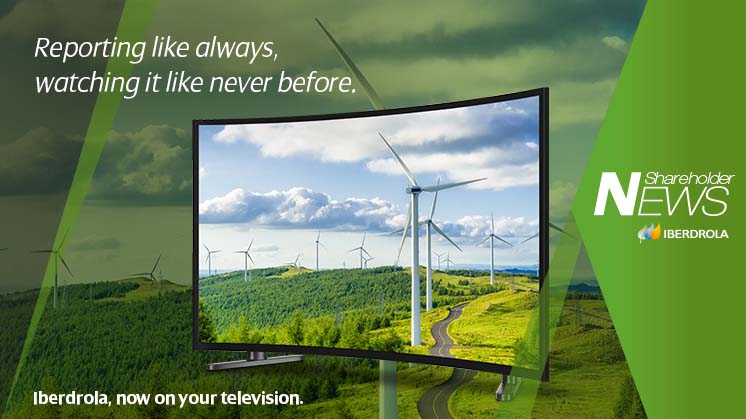
The aim of the channel is not for shareholders to be permanently glued to it, explains Ignacio Cuenca, director of investor relations at Iberdrola. ‘The key is that shareholders have the information available to consume when they want or need it,’ he says. ‘Accionistas NEWS is also an extension of what we call a permanent AGM, where we are available to shareholders throughout the year, ready to answer their questions.’
The most popular form of content on the platform is live events (receiving 31 percent of views), says Cuenca, followed by financial reporting (23 percent) and information on social engagement and sustainability (22 percent). Subscribers to the platform are also highly engaged with the company, he adds: when an email is sent out about new content, 92 percent of users open the message and 57 percent click through.
Asked what advice he would give other IROs on launching a smart TV platform, Cuenca says the project requires strong management backing, as producing content on a weekly basis requires support from many areas of the business. It is also necessary to have a ‘clear understanding’ of what is interesting to stakeholders and how you want to position the firm, he says.
Move earnings to Zoom
During the Covid-19 pandemic, Duolingo suffered a technical mishap during one of its traditional, audio-only earnings calls. ’At that moment, our CEO asked why we were using 1980s technology, and why didn’t we just have a Zoom meeting?’ says Deborah Belevan, vice president of investor relations at the language learning company. ‘From that moment on, we started using video for our earnings calls and have never looked back.’
The change coincided with a broader shake-up of the quarterly results process. Duolingo took the existing press release, presentation deck and conference call script and combined them into a single shareholder letter that is released an hour and a half before the call. The video section is then dedicated almost entirely to Q&A. The new approach impressed the judges at the IR Magazine Awards – US 2023, where Duolingo went home with the prize for best innovation in shareholder communications.
To prepare for the change, Belevan spent time researching other companies that did video earnings calls. She also checked in with her covering analysts to see whether they would be comfortable going on screen to ask their questions.
‘It was not an issue at all,’ she says. ‘Ever since Covid started, everyone has become so used to being on video, it wasn’t a big ask. Ninety percent of our analysts said, No problem, and only one said that it’s kind of a pain if he’s traveling, but we assured him that it’s fine to stay off camera if he needs to every so often.
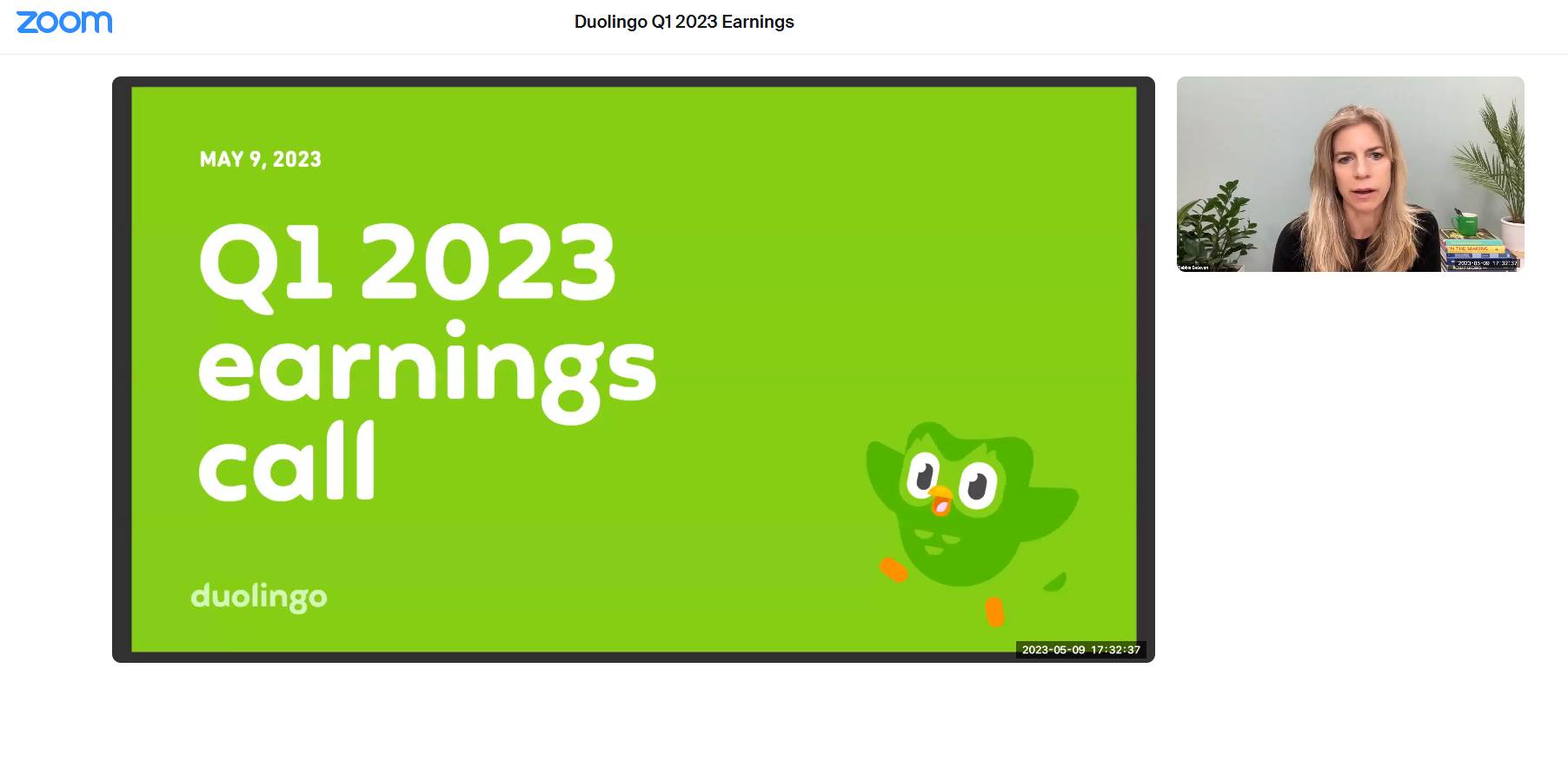
‘The great thing about video is that it’s a lot more engaging. We have a very charismatic CEO who is better on video, and it’s helpful to see analysts’ expressions as they’re hearing an answer.’
What advice would Belevan give to other IR teams thinking about trying something similar? She says it’s important to consider how the management team works, especially during the earnings call process.
‘If your executives rely on their notes during Q&A, or scribble answers to each other to ensure all key messages are hit, that would look too chaotic on camera,’ she says.
‘In our case, we have a few Q&A prep sessions in the days leading up to the call, during which our CEO and CFO practice all the top questions. During the live call, they confidently answer questions looking into the camera.’
Belevan also recommends checking out how other companies do video earnings calls and making sure you have a strong IT team; that will ensure the logistics run smoothly and everything looks and sounds polished.
‘Otherwise, hire a production company that will take care of all this for you so it looks professional,’ she says. ‘We’ve received nothing but positive feedback from the investment community, and I can see more companies moving to video over time.’
Try a ‘social first’ approach to the annual report
The terms ‘digestible content’ and ‘annual report’ are not normally found in the same sentence. But Covestro, the German supplier of high-tech polymer materials, wants to challenge this apparent convention.
The company has adopted a ‘social first’ approach to storytelling in its online annual report. For different topics, it has produced bite-sized pieces of content, such as snippets of text, tightly edited videos and social media tiles. While the content ‘packages’ tell a concise story for readers within the report, they are also easily repurposed for different social media channels.
One section, titled ‘Energy source of the future’, looks at how hydrogen can support the shift to a low-carbon economy. It features just 88 words of text, a hashtag and a 90-second video chat between Covestro’s CEO Markus Steilemann and Australian businessman Andrew Forrest. Other topic areas include innovation, the circular economy and electric vehicles.
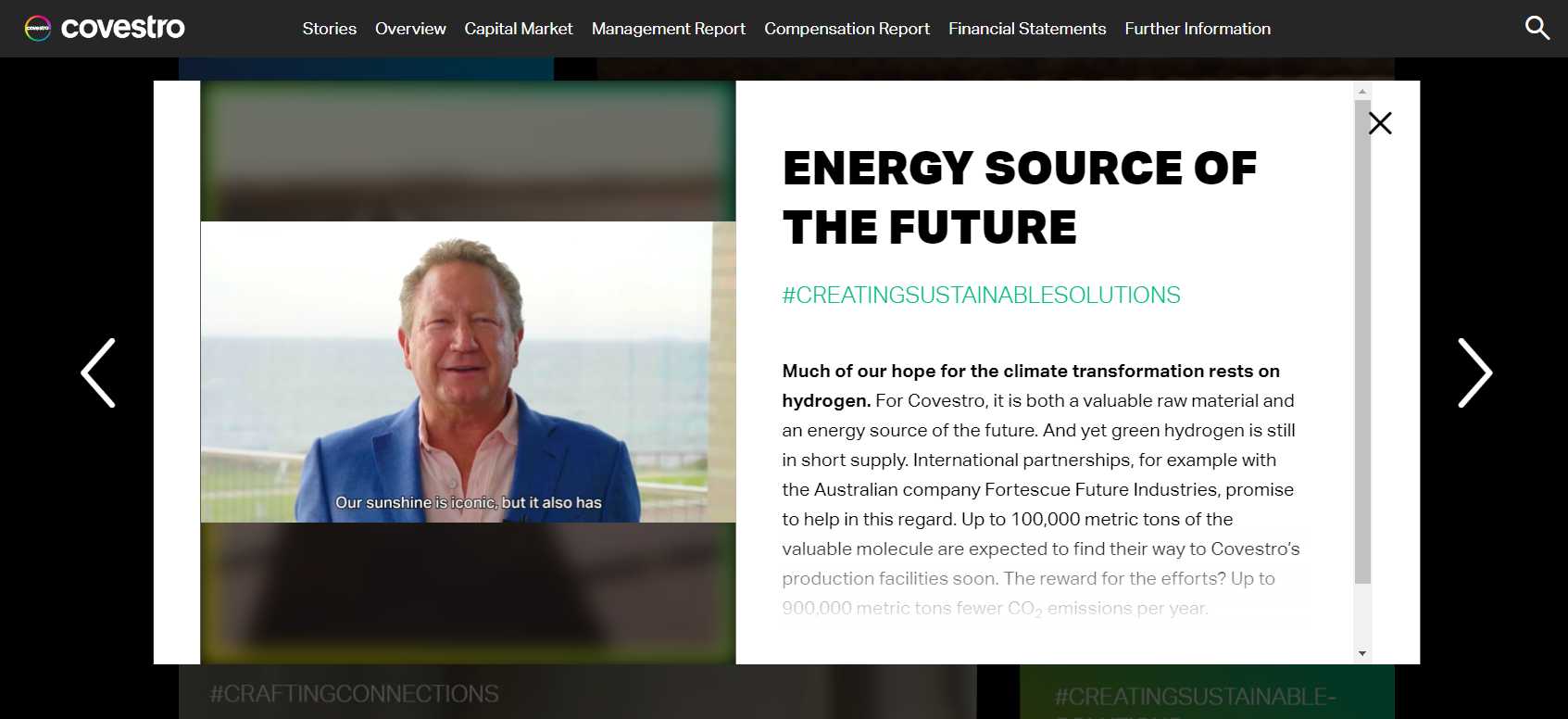
‘We switched to a completely digital annual report a few years ago and adapted to the way people consume media,’ explains Svenja Paul, corporate communications manager at Covestro.
‘In the magazine section, for example, we use ‘snackable’ articles instead of long texts and many interactive elements, as well as images and videos, and all of this is optimized for mobile devices. Our goal is to convey the success stories of the colleagues behind the figures in the most exciting and modern way possible.
‘Of course, it’s not always easy to break down complex issues into just a few lines but, with the many dedicated colleagues at Covestro, this worked out just fine for us. The snackable content from the annual report is therefore played out via a wide variety of corporate channels and is an integral part of our social media activities. This is very well received by our target groups.’